

Cast Steel Globe Valve: A Reliable Choice for Controlled Industrial Flow
In industrial piping systems, valve selection is closely connected with process stability, equipment protection, and long-term operating efficiency. Different applications require different valve structures, and when accurate flow regulation, dependable shut-off, and robust construction are important, the Cast Steel Globe Valve remains a widely used solution.
Unlike valves designed primarily for simple on/off isolation, globe valves are particularly suitable for applications where controlling and regulating the movement of a medium is part of normal operation. The use of cast steel provides a strong and practical construction for industrial environments, making this valve type suitable for a broad range of steam, water, oil, gas, and process-fluid systems.
As industrial projects become increasingly intricate, engineers are looking beyond basic valve functions. Material selection, flow characteristics, sealing performance, maintenance requirements, and operating conditions all intertwine to determine whether a valve can provide reliable service over its working life.
Table of Contents
ToggleUnderstanding the Role of a Cast Steel Globe Valve
A globe valve controls fluid flow through the movement of a disc toward or away from a stationary seat. This design allows the valve to regulate the opening gradually rather than relying only on fully open or fully closed positions.
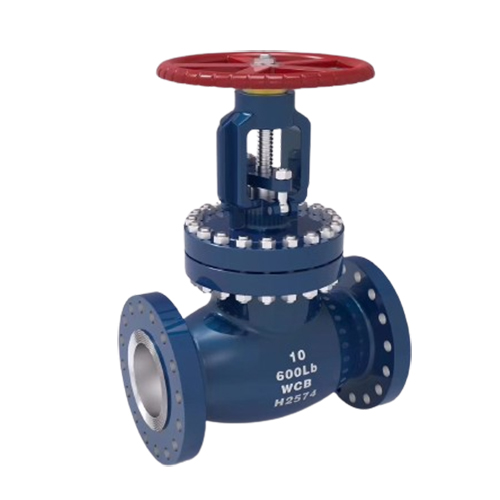
The body of a cast steel globe valve is manufactured using cast steel, providing a combination of mechanical strength, structural stability, and suitability for demanding industrial service.
This makes the valve particularly useful in piping systems where operators need to:
- Regulate flow rates
- Control process conditions
- Shut off a pipeline when required
- Manage steam and liquid media
- Maintain stable downstream operation
- Protect connected equipment from unsuitable flow conditions
The globe valve’s internal flow path creates more resistance than some full-bore isolation valve designs. However, this characteristic is part of what makes the globe valve useful for controlled flow adjustment.
Why Cast Steel Matters in Industrial Valve Construction
Material selection is one of the fundamental decisions behind valve performance. A valve may have a sophisticated internal design, but the body and pressure-retaining components must withstand the mechanical and environmental conditions of the application.
Cast steel offers a practical combination of strength and manufacturing flexibility. It can be used to produce robust valve bodies with complex internal passages while maintaining the structural integrity required for industrial piping.
For engineers, this creates a useful balance between construction reliability and application flexibility.
Depending on project requirements, cast steel globe valves can be configured for different pressure classes, connection standards, dimensions, and trim combinations. The precise configuration should always be selected according to the actual medium, temperature, pressure, pipeline size, and applicable standards.
Flow Regulation Where Process Control Matters
One of the defining characteristics of a globe valve is its ability to provide controlled flow adjustment.
In many industrial systems, the objective is not simply to move a fluid from point A to point B. Operators may need to adjust flow according to production demand, maintain stable pressure conditions, regulate heating systems, or control the supply of steam to downstream equipment.
The disc-and-seat arrangement of a globe valve makes gradual adjustment possible.
For example, in a steam system, changing the valve opening can influence the amount of steam entering a downstream process. In a water treatment system, controlled opening can help regulate the movement of process water. In chemical processing, precise valve positioning can contribute to more stable process conditions.
This ability to combine regulation and shut-off makes the globe valve an important part of the broader industrial flow-control mosaic.
Applications Across Different Industrial Systems
The versatility of cast steel globe valves allows them to appear in many different industrial environments.
Power Generation:Power plants contain extensive networks for steam, feedwater, cooling systems, and auxiliary services. Globe valves can be used where controlled flow and reliable shut-off are required.Their robust construction makes them suitable for demanding service conditions when the valve specification is correctly matched to the system.
Oil and Gas:Oil and gas facilities contain complex piping networks that require reliable control of various process fluids. Cast steel globe valves can be applied in process and utility systems where throttling and isolation functions are required.The final valve configuration depends on the medium, pressure, temperature, and project standards.
Petrochemical and Chemical Processing:Chemical and petrochemical facilities often involve complicated combinations of pressure, temperature, and fluid characteristics.Valve selection therefore needs to consider not only the body material but also seat materials, trim, sealing components, connection standards, and operating conditions.A properly specified cast steel globe valve can become part of a larger flow-control strategy for these demanding installations.
Steam and Industrial Utility Systems:Steam, hot water, compressed utilities, and other industrial services frequently require controlled flow.In such systems, the globe valve’s regulating capability can be particularly useful where operators need to adjust flow instead of relying exclusively on isolation valves.
The Importance of Internal Valve Components
A globe valve is more than its outer body. Its performance depends on the interaction between several components.
The valve body provides the primary pressure-containing structure. The bonnet connects to the body and supports internal components. The stem transfers movement from the actuator or handwheel to the disc, while the disc and seat work together to control the flow passage.
Each component contributes to the overall operating performance.
The quality of machining is also important. Accurate contact between the disc and seat can influence shut-off performance, while appropriate stem and packing arrangements help support reliable operation.
This intricate relationship between components means that valve manufacturing requires more than simply producing a strong body. Dimensional accuracy, material control, assembly quality, and testing all form part of the manufacturing process.
Selecting the Right Valve for the Service
There is no universal valve configuration suitable for every industrial application. A cast steel globe valve should be selected according to the complete operating environment.
Important considerations include:
| Selection Factor | Why It Matters |
|---|---|
| Nominal Size | Determines compatibility with the pipeline |
| Pressure Rating | Must correspond to system operating requirements |
| Temperature | Influences body, trim, seat, and sealing material selection |
| Medium | Determines material and sealing requirements |
| Flow Characteristics | Helps determine whether globe valve regulation is appropriate |
| Connection Standard | Ensures compatibility with the piping system |
| Installation Position | Influences accessibility and maintenance |
| Operating Method | Determines whether manual or automated operation is required |
Considering these factors together helps engineers avoid treating the valve as an isolated component. Instead, the valve becomes part of the entire piping system.
Cast Steel Globe Valve vs Other Globe Valve Configurations
Globe valves are available in different structural and material configurations, each serving particular applications.
Cast steel construction is often selected when a project requires a robust industrial valve body with a practical balance between strength, manufacturing flexibility, and application adaptability.
Other globe valve designs may focus on specific requirements such as reduced pressure loss, specialized sealing, compact dimensions, or severe-service conditions.
For example, a Y-pattern globe valve changes the internal flow path to reduce resistance, while specialized pressure-seal designs are developed for particular high-pressure applications.
Therefore, choosing between different globe valve configurations should begin with the operating requirements rather than simply comparing product names.
Manufacturing Quality Creates Long-Term Value
For industrial valve buyers, the manufacturing process is an important part of the purchasing decision.
A reliable valve manufacturer should maintain control over raw materials, machining, assembly, pressure testing, dimensional inspection, and final quality checks.
International industrial projects may also require valves manufactured according to recognized standards and project specifications. ZHONGYOU VALVE states that its products are manufactured according to standards including GB, JB, ANSI, API, DIN, BS, GOST, and JIS, depending on product and project requirements.
Such standardization helps create a common technical language between manufacturers, engineering companies, contractors, and end users.
Supporting More Reliable Industrial Operations
The value of a globe valve is ultimately measured by how effectively it performs within a complete process system.
A properly selected Cast Steel Globe Valve can support controlled flow, dependable shut-off, and stable operation across a wide range of industrial applications. However, its performance depends on correct sizing, suitable materials, appropriate pressure and temperature ratings, and proper installation.
For this reason, professional valve selection should consider the entire operating environment rather than focusing on one specification in isolation.
As a manufacturer of industrial valves, ZHONGYOU VALVE provides a range of globe valve solutions for different industrial requirements, including Cast Steel Globe Valve, Y Pattern Globe Valve, Pressure Seal Bonnet Globe Valve, Bellows Seal Globe Valve, and Angle Globe Valve.
Looking Beyond the Valve Body
Modern industrial flow control is a complex tapestry of equipment, piping, instrumentation, and process requirements. A valve may be a relatively small component within the system, but its influence on flow stability and equipment operation can be significant.
The Cast Steel Globe Valve continues to hold an important position because its design combines controlled flow regulation with reliable isolation in a robust industrial construction.
For projects involving steam, power generation, oil and gas, petrochemical processing, chemical production, and general industrial utilities, selecting the appropriate globe valve configuration can help create a more dependable flow-control system.
With careful engineering, suitable materials, controlled manufacturing, and proper testing, a cast steel globe valve can transcend its role as a simple pipeline component and become an integral part of a reliable industrial process.